

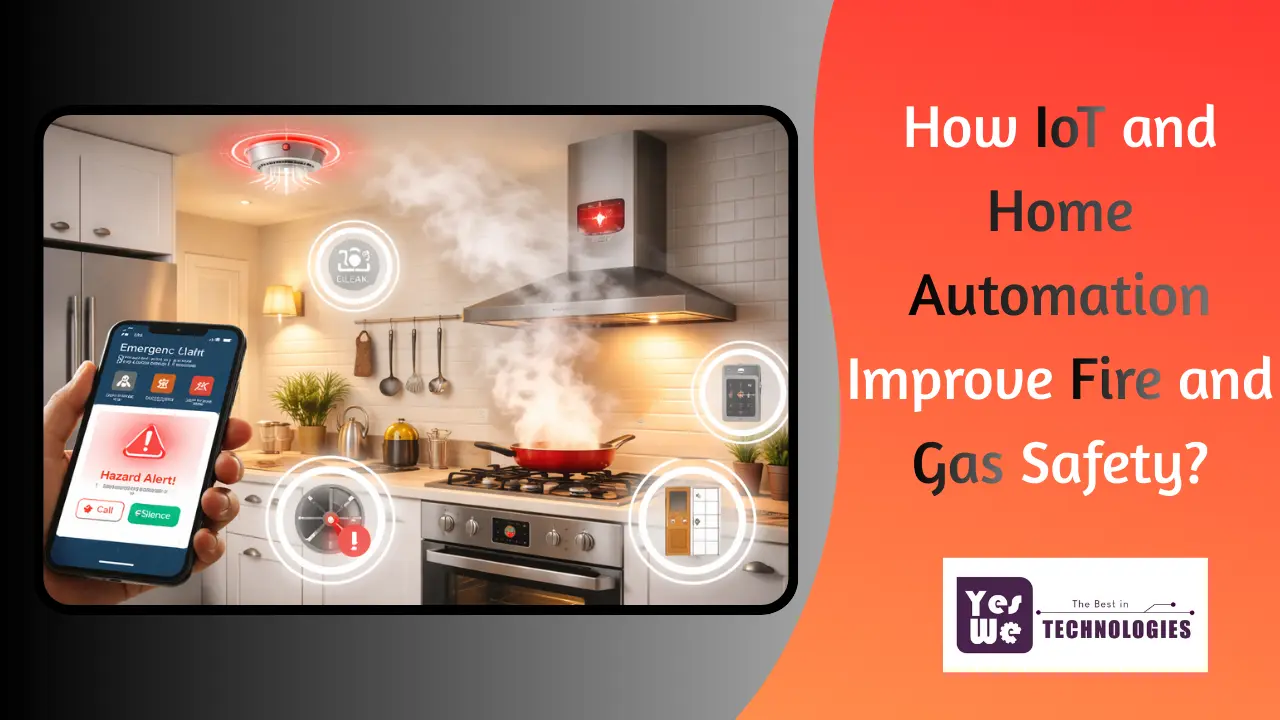
Fire and gas accidents are among the most dangerous and unpredictable emergencies in homes and workplaces. In India—especially in urban cities like Bangalore, where apartments, villas, and commercial spaces are densely packed—the risks are even higher due to electrical overloads, LPG usage, and unattended appliances.
Traditional smoke alarms and gas detectors help, but they often react too late or rely on someone being physically present to take action. This is where IoT and home automation fundamentally change the way fire and gas safety is handled—by moving from reaction to prevention and instant response.
Why Fire and Gas Safety Needs Smarter Solutions Today?
Most fire and gas accidents don’t happen suddenly—they build up silently:
- A gas leak in the kitchen
- An overheated electrical circuit
- An unattended stove
- A short circuit caused by power fluctuations
Traditional safety devices only alert you. Smart IoT-based systems, on the other hand, detect, decide, and act automatically, even if no one is home.
For modern homes and offices in Bangalore, this proactive approach is becoming a necessity—not a luxury.
Understanding Fire and Gas Risks in Modern Homes
Let’s look at the most common risks in Indian households:
Fire Risks
- Electrical short circuits
- Overloaded power sockets
- Faulty appliances
- Inverter and battery overheating
Gas Risks
- LPG gas leakage in kitchens
- Improper regulator connections
- Unnoticed slow leaks
- Closed spaces with poor ventilation
Because these risks often develop quietly, manual monitoring simply isn’t enough.
What Is IoT-Based Fire and Gas Safety?
IoT-based fire and gas safety systems use connected sensors, automation logic, and real-time alerts to detect danger early and respond instantly.
Unlike standalone alarms, IoT systems:
- Continuously monitor conditions
- Communicate with other smart devices
- Trigger automated safety actions
- Notify homeowners and caregivers instantly
When integrated with home automation, these systems don’t just warn you—they protect you actively.
Key IoT Devices Used in Fire and Gas Safety
Smart Smoke Detectors
Smart smoke detectors can identify smoke patterns early and reduce false alarms caused by steam or cooking fumes. They alert homeowners instantly via mobile notifications, even when they’re not at home.
Smart Heat Sensors
Heat sensors detect rapid temperature rises—ideal for kitchens, electrical panels, and utility areas. These sensors are especially effective in preventing electrical fire incidents.
Gas Leak Sensors (LPG & PNG)
Gas sensors continuously monitor air quality for LPG or PNG leaks. The moment gas concentration rises above safe levels, alerts are triggered—often before the smell becomes noticeable.
Smart Electrical Monitoring
IoT-based power monitoring systems track electrical load, voltage fluctuations, and abnormal consumption patterns. This helps prevent fires caused by short circuits or overloaded wiring.
How Home Automation Responds During an Emergency
This is where IoT-powered automation truly stands out.
When a fire or gas leak is detected, the system can automatically:
- Send instant alerts to your smartphone
- Shut off the main electrical supply
- Close the gas valve automatically
- Activate exhaust fans and ventilation
- Turn on emergency lighting
- Unlock smart doors for safe exit
- Trigger sirens or alarms
- Notify family members or caregivers
All of this happens within seconds, even if no one is physically present.
Preventive Safety Through Smart Automation
Smart safety isn’t just about emergencies—it’s about prevention.
Automation helps by:
- Turning off gas stoves left unattended
- Powering down appliances during overloads
- Running scheduled system health checks
- Activating night-time safety routines
- Monitoring long-term electrical usage patterns
This proactive layer significantly reduces the chance of accidents.
Fire and Gas Safety for Apartments vs Independent Homes
Apartments
- Shared walls increase fire spread risk
- Central gas pipelines affect multiple units
- Automation ensures early alerts and quick action
Independent Homes & Villas
- Larger spaces require zone-based monitoring
- Smart automation ensures complete coverage
- Ideal for remote monitoring during travel
IoT safety systems can also integrate with building management systems (BMS) in larger residential complexes.
Benefits for Families, Elderly, and Remote Homeowners
For Families
- Immediate alerts even when at work
- Faster response during emergencies
- Reduced anxiety and stress
For Elderly Residents
- Automatic response without needing to react
- Emergency alerts sent to family members
- Reduced dependency during critical moments
Additional read 👉 Discover how smart home automation improves safety, comfort, and independence for elderly and disabled living. Learn how Bangalore homes are becoming safer with
For Frequent Travelers
- Real-time alerts anywhere in the world
- Remote monitoring and control
- Confidence that home is protected even when vacant
Real-Life Scenario: How Automation Prevents a Major Incident?
Imagine a gas leak starting late at night in the kitchen.
In a traditional home:
- The leak goes unnoticed
- Gas builds up
- Risk escalates rapidly
In an automated home:
- Gas sensor detects abnormal levels
- Gas valve shuts off automatically
- Exhaust fan turns on
- Alerts reach the homeowner instantly
- Emergency lighting activates
A potential disaster is prevented—without panic or delay.
Compliance, Reliability, and System Redundancy
For safety systems, reliability is critical.
Professional IoT safety setups include:
- Battery backup during power cuts
- Network redundancy
- Fail-safe automation logic
- Regular health monitoring
This ensures safety systems work even during outages, which is essential in Indian urban conditions.
Why IoT-Based Fire and Gas Safety Is the Future?
As homes become smarter, safety systems must evolve too.
Future-ready homes:
- Prioritize preventive safety
- Use automation instead of manual intervention
- Integrate safety into daily routines
In smart cities like Bangalore, IoT-based fire and gas safety is becoming a standard expectation, especially in premium apartments and commercial spaces.
Conclusion: Smarter Systems Save Lives
Fire and gas safety is not just about alarms—it’s about timely action.
IoT and home automation transform safety by:
- Detecting risks early
- Responding instantly
- Reducing human error
- Protecting lives and property
A smart safety system doesn’t just warn—it acts.
Protect Your Home with Yes We Technologies – Bangalore
At Yes We Technologies, we specialize in IoT-based fire and gas safety solutions in Bangalore, fully integrated with smart home automation systems.
Our solutions include:
- Smart smoke and heat detectors
- LPG and gas leak sensors
- Automated gas valve and power cutoff
- Emergency alert systems
- Integration with lighting, HVAC, and access control
- End-to-end smart home automation services
We design custom safety-first automation systems for apartments, villas, and commercial spaces—ensuring your home doesn’t just feel smart, but truly safe.
👉 Visit https://yeswe.in to consult our experts and build a safer, smarter home in Bangalore.